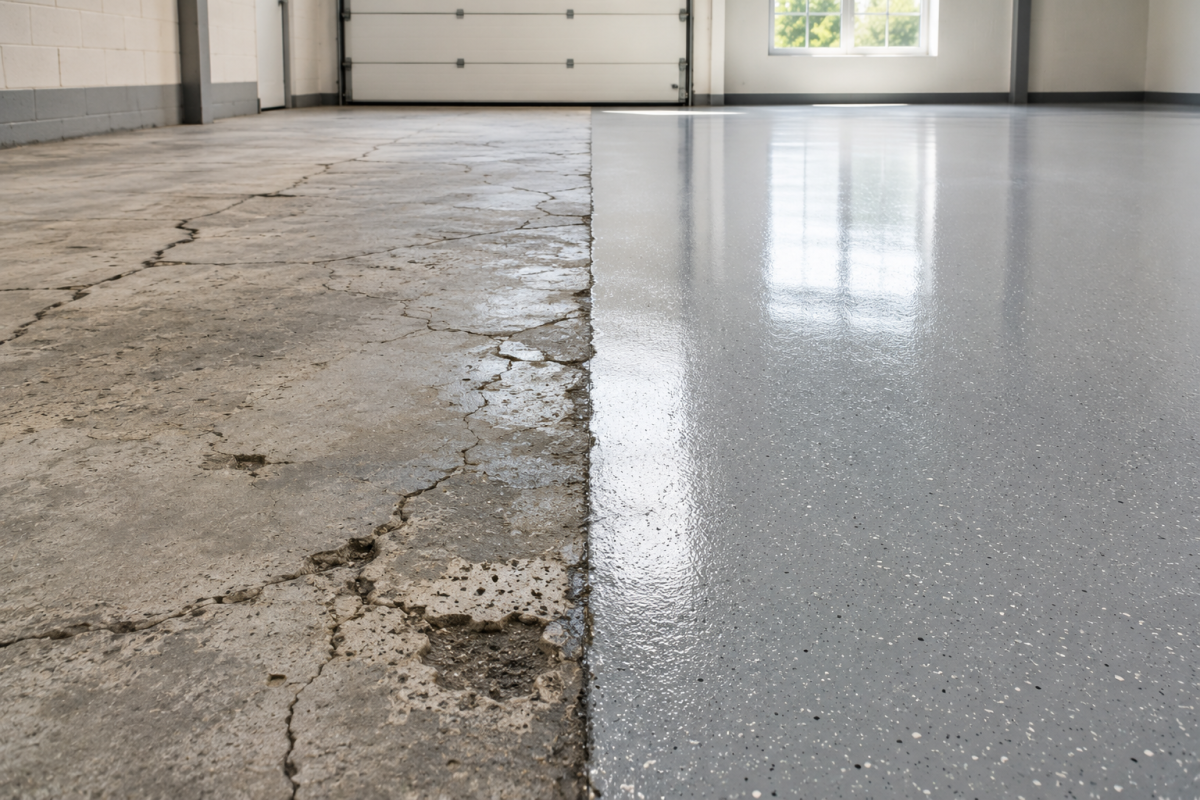
Epoxy Concrete Repair: The Complete Guide to Restoring and Protecting Concrete Surfaces
August 10, 2026Epoxy Flooring
Discover how epoxy concrete repair restores cracks, chips and worn surfaces while protecting concrete for years to come.

August 10, 2026Epoxy Flooring
Discover how epoxy concrete repair restores cracks, chips and worn surfaces while protecting concrete for years to come.
July 20, 2026Epoxy Flooring
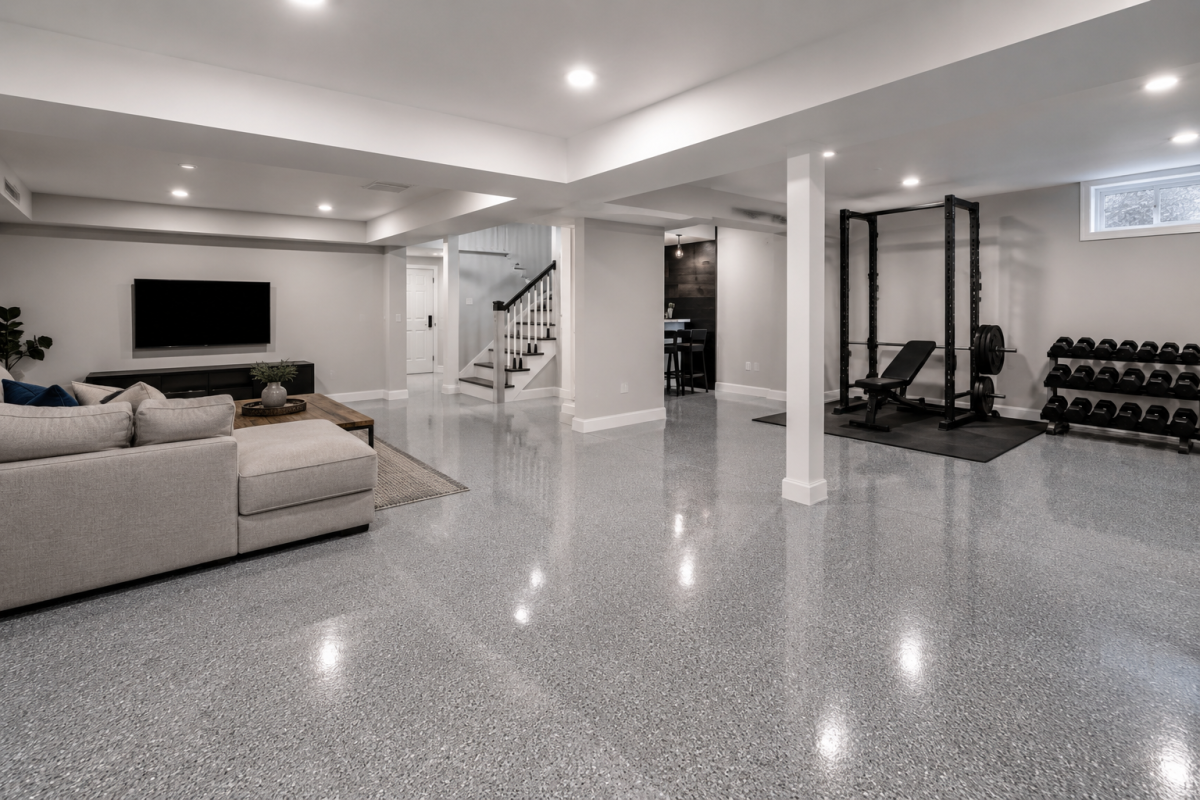
Basements have evolved significantly over the years. What was once considered a dark storage area is now frequently transformed into a home office, gym, entertainment room, guest suite, or additional living space. As homeowners invest in making their basements more functional, flooring has become an important consideration.
One of the most practical and attractive options available today is an epoxy basement floor. Combining durability, moisture resistance, and aesthetic appeal, epoxy flooring offers homeowners a solution that is both functional and visually appealing.
At Custom Concrete Solutions, we help homeowners throughout Connecticut upgrade their basements with professionally installed epoxy flooring systems designed to withstand daily use while enhancing the overall appearance of the space.
An epoxy basement floor is created by applying a resin-based coating system directly over a prepared concrete slab. The epoxy chemically bonds to the concrete surface, creating a seamless and highly durable protective layer.
Unlike traditional flooring materials such as carpet, laminate, or vinyl, epoxy becomes an integrated part of the concrete surface. This creates a floor that resists moisture, stains, impacts, and wear while maintaining a clean and polished appearance.
Basements present unique challenges that many flooring materials struggle to address.
Even well-constructed basements can experience moisture issues due to:
Many flooring materials can warp, swell, mold, or deteriorate when exposed to moisture. Epoxy flooring creates a moisture-resistant surface that helps protect the underlying concrete.
Basements often experience varying temperatures throughout the year. Epoxy coatings maintain their integrity despite these changes and do not suffer from the expansion and contraction issues common with some flooring materials.
Finished basements often serve multiple purposes. Furniture, exercise equipment, storage systems, and foot traffic can all contribute to wear and tear. An epoxy floor is designed to handle these demands while maintaining its appearance.
One of the biggest advantages of an epoxy basement floor is its durability. Once cured, epoxy creates a hard, resilient surface capable of withstanding:
This makes it ideal for both finished and unfinished basement environments.
Unlike carpet or laminate flooring, epoxy does not absorb moisture. This helps reduce the risk of:
For Connecticut homeowners, where seasonal moisture can be a concern, this benefit is especially valuable.
Basements often accumulate dust and dirt, especially when used for storage. Epoxy flooring simplifies maintenance by creating a seamless surface that is easy to clean.
Routine maintenance typically includes:
There are no grout lines, fibers, or seams where dirt can become trapped.
Today’s epoxy flooring systems are available in a wide variety of finishes.
Popular options include:
These options allow homeowners to create a basement that feels more like a finished living space and less like a utility area.
Explore our flooring services here
Exercise equipment can be heavy and cause wear on traditional flooring. Epoxy provides a durable surface capable of supporting gym equipment while remaining easy to clean.
Many homeowners convert basements into home theaters or entertainment spaces. Epoxy flooring offers a clean, polished look that complements modern design.
As remote work continues to grow, basements are increasingly being converted into offices. Epoxy flooring creates a professional environment that is both functional and attractive.
Families often use basements as play areas for children. Epoxy floors are easy to clean and resistant to spills, making them a practical choice.
Even unfinished basements benefit from epoxy flooring. The coating protects the concrete while creating a cleaner, brighter storage space.
While carpet can feel comfortable underfoot, it is highly susceptible to moisture damage and staining.
Epoxy offers:
Vinyl flooring may appear attractive initially, but it can peel, bubble, or deteriorate if moisture becomes trapped underneath.
Epoxy bonds directly to the concrete, eliminating these concerns.
Tile can crack under impact and requires ongoing grout maintenance.
Epoxy provides a seamless alternative that eliminates grout lines while maintaining excellent durability.
Professional installation is critical to achieving long-term success with an epoxy basement floor.
The concrete is cleaned and mechanically ground to create the ideal surface profile for adhesion.
Any cracks, pits, or imperfections are repaired before coating begins.
The slab is evaluated for moisture conditions to ensure compatibility with the coating system.
A primer coat is applied to maximize adhesion and durability.
The epoxy system is installed according to the selected design and finish.
A protective topcoat enhances stain resistance, durability, and appearance.
The floor is allowed to fully cure before use.
Many homeowners consider DIY epoxy kits. While these products may appear cost-effective, they often lack the durability and longevity of professional systems.
Professional installation offers:
At Custom Concrete Solutions, we use proven methods and premium materials to ensure lasting performance.
An epoxy basement floor is an investment that provides value for years to come.
Benefits include:
For homeowners looking to maximize their usable living space, epoxy flooring offers an excellent return on investment.
A professionally installed epoxy floor can last 10 to 20 years or more depending on usage and maintenance.
Epoxy is highly moisture resistant and helps protect concrete from water-related damage. However, underlying water intrusion issues should be addressed before installation.
Yes. As long as the concrete is structurally sound, it can often be repaired and prepared for epoxy installation.
Slip-resistant additives can be incorporated into the finish to improve traction and safety.
Most residential basement epoxy projects can be completed within a few days, depending on size and conditions.
While results vary, a professionally finished basement can improve a home’s appeal and functionality, which may positively influence value.
An epoxy basement floor offers homeowners a practical way to transform an underutilized basement into a clean, durable, and attractive living space. Whether you are creating a home gym, office, entertainment room, or simply improving your storage area, epoxy flooring provides the protection and performance needed to make the most of your investment.
At Custom Concrete Solutions, we specialize in installing high-performance epoxy flooring systems that are built to last and designed to enhance your home.
Ready to upgrade your basement? Contact our team today to schedule a consultation.
Let us help you create a basement floor that combines beauty, durability, and long-term value.